Automated 3D shape digitization
A large part of my professional and academic career was devoted to 3D digitization of shape of objects. There are various 3D sensing devices, starting from depth cameras, LIDARs and laser scanners, through stereo-cameras to structured light scanners.
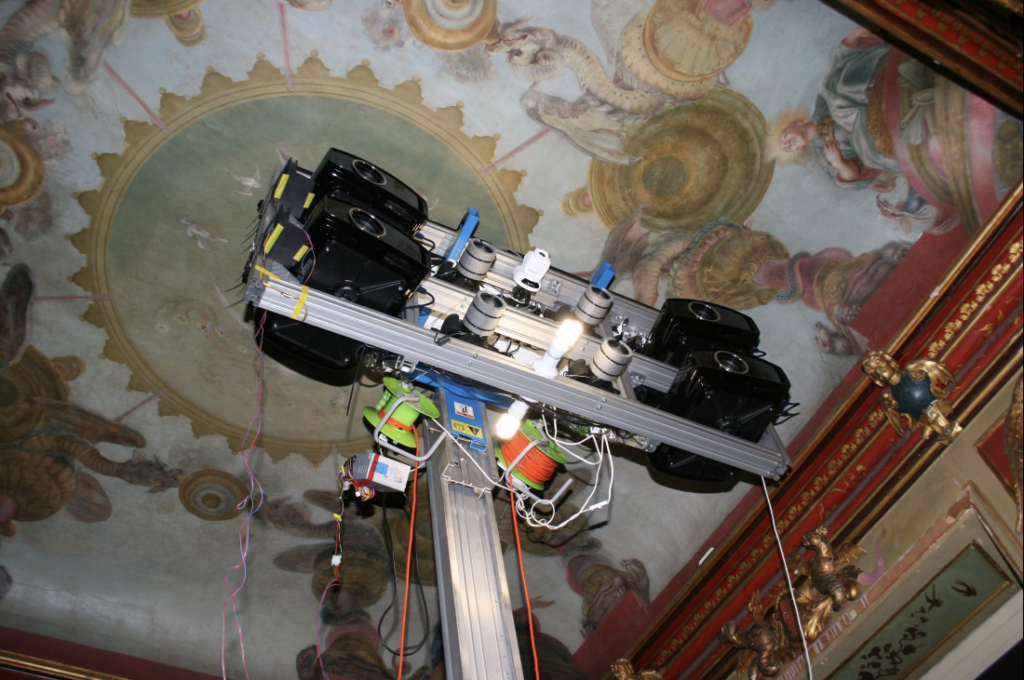
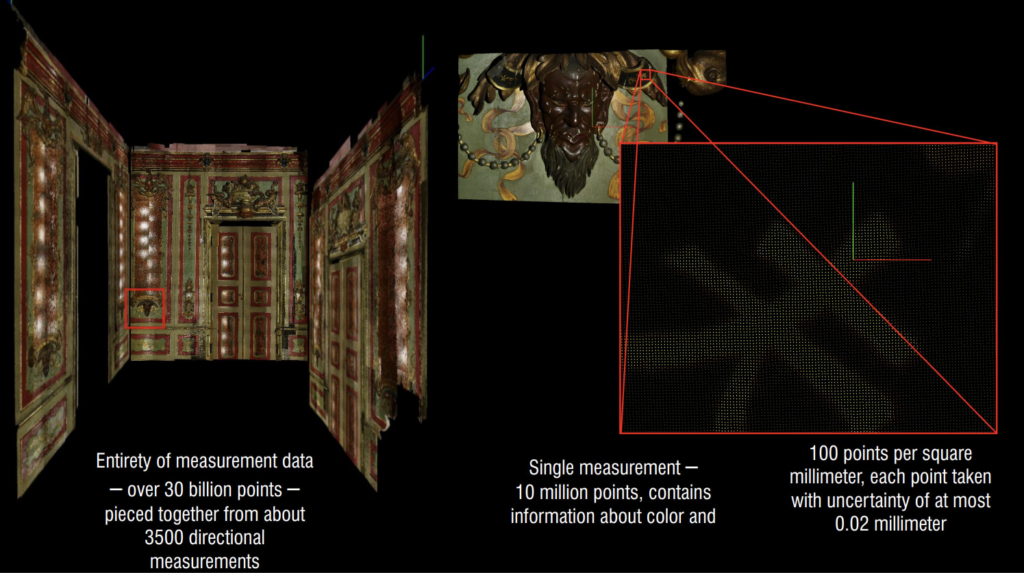
At Warsaw University of Technology we worked on the latter, due to their potential for very high precision and dense sampling rate. The best devices we built were capable of capturing surface details with 10000 points per mm2. To obtain such density, the working area of single scan is very small, comparable to box of matches. Therefore, to create full 3D model of an object (for example sculpture), one has to make hundreds or even thousands of partial scans. The data needs to be later integrated into the complete model. The process is extremely expensive (due to labor cost), time consuming and not objective (influenced by the operator).
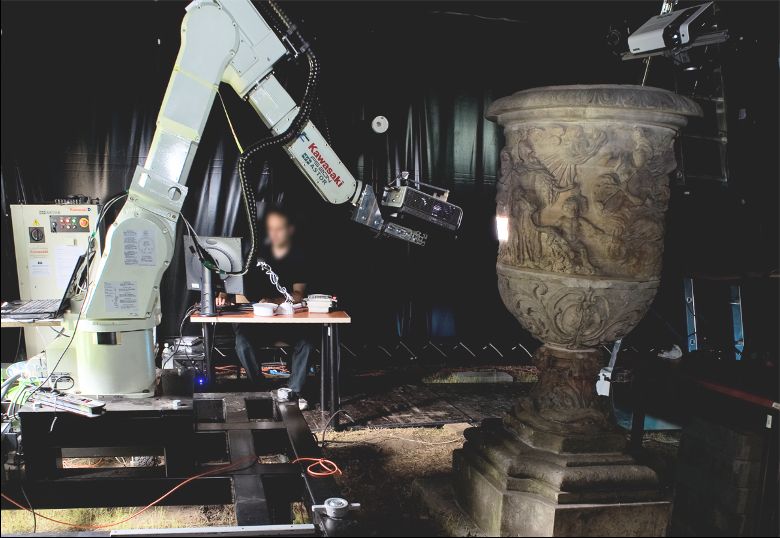
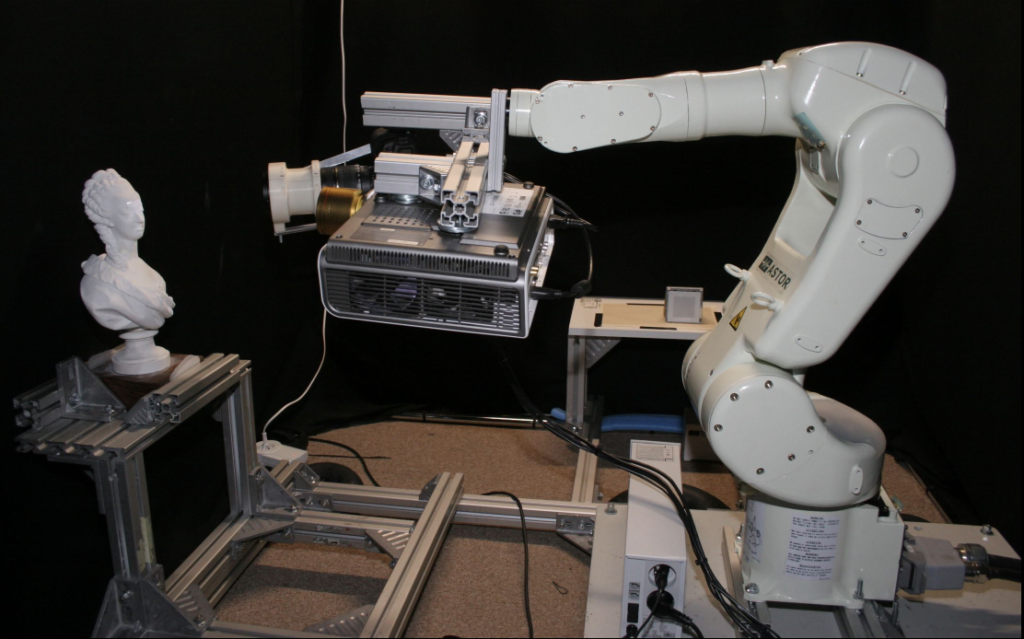
We worked on the automation of the process to the point when the 3D model can be obtained fully autonomously. To realize this, the scanner head had to be positioned with robot arm and the object rotated on a motorized table. Specialized algorithms were used for calculating where to put the scanner for next scans, how to move the elements without danger of collision and, finally, for integrating measurements (basing on the knowledge on the position of scanner vs measured object) into full 3D model.
We have built systems for various applications – predominantly for cultural heritage digitization. These systems were used in Museum of King Jan III’s Palace at Wilanow, for making digital copies of large part of their collection.
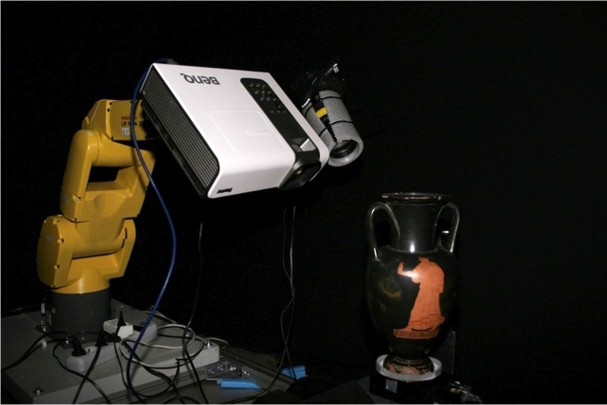
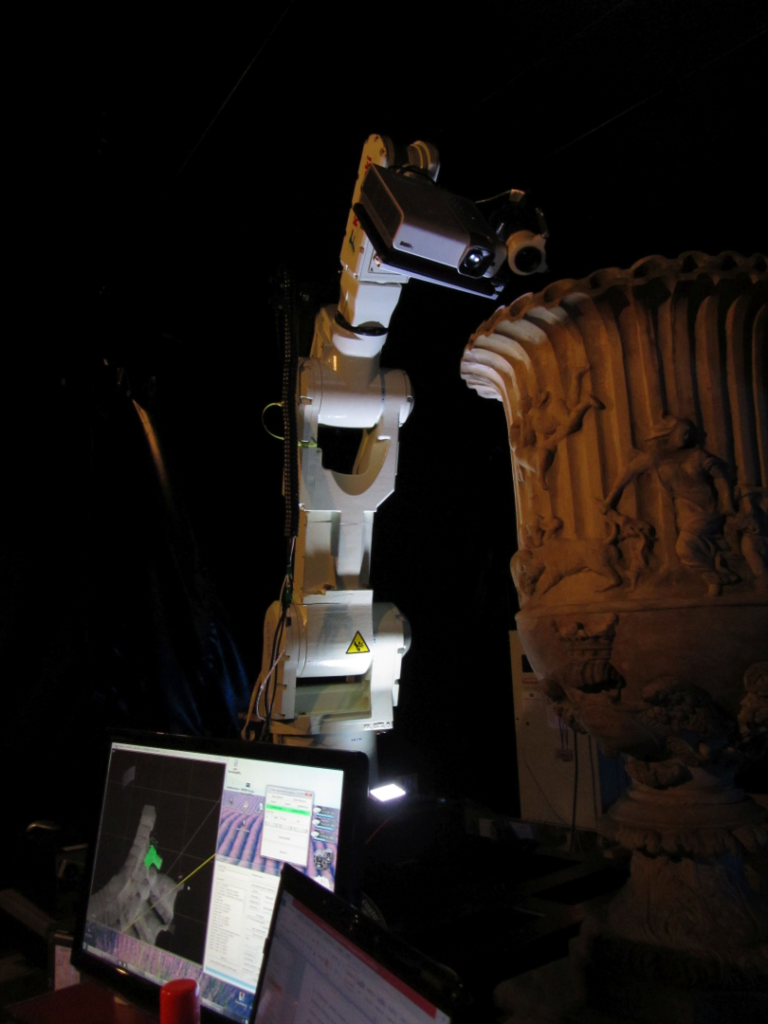
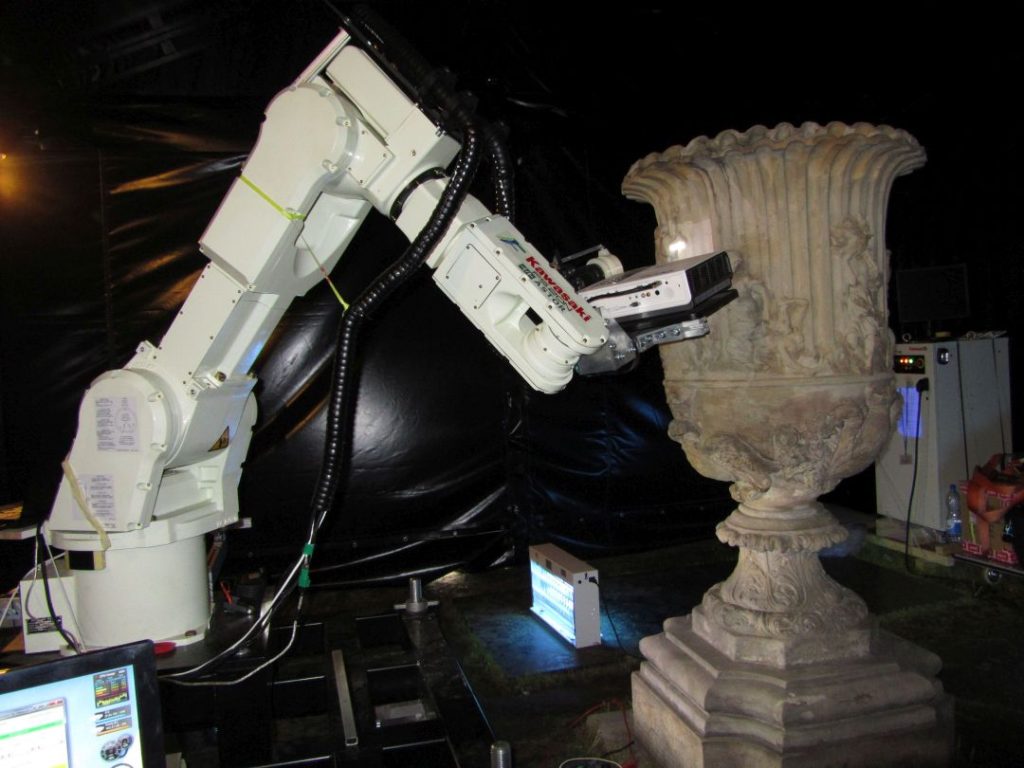
Below, some videos from the project: